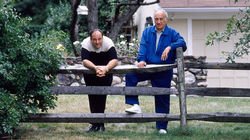
S01E06 - aired 1999-02-14

Pax Soprana

Season 1 episode guide - plot, credits, music, and analysis.

Plot

The dynamic of the Soprano crime family shifts dramatically in this installment, as Tony finds himself navigating a treacherous new political landscape. With Junior finally installed as the official Boss, the old order has been dismantled, but the new hierarchy is unstable and fraught with tension. The capos, who have spent years operating under Jackie Aprile's watchful eye, are quick to notice that their uncle is enjoying his newfound power without sharing the spoils. They feel sidelined, viewing Junior's refusal to honor past agreements as a betrayal of the family code. When Junior decides to tax Hesh - a loyal soldier whose father worked for Tony Sr. - the situation reaches a breaking point. Hesh has never been taxed before in the history of the organization, and Tony is determined to protect him from this new burden. To resolve the conflict without drawing immediate attention, Tony orchestrates a complex maneuver behind his uncle's back. He arranges a meeting between Hesh, Junior, and New York capo Johnny Sack, ostensibly for a discussion on how to keep the New York bosses happy. Junior, eager to appear magnanimous and maintain a facade of control, agrees to cut a deal with Hesh. However, Tony and Johnny have already planned this outcome in advance at Johnny's Manhattan restaurant. The meeting is less about negotiation and more about confirming an agreement that ensures Hesh remains untaxed, effectively neutralizing Junior's threat while allowing the younger Boss to save face. The episode also delves deeper into the personal lives of the Sopranos, particularly Tony and Carmela. They celebrate their 18th wedding anniversary in a subdued manner at Johnny's restaurant. While Tony attempts to engage in some light chitchat with Johnny Sack, Carmela is visibly overwhelmed by the emotional weight of the occasion. She breaks down crying not over food, but over the sheer volume of veal she has eaten, a moment that highlights her struggle to maintain composure amidst the chaos of their lives. A significant subplot involves the growing distance between Tony and his wife. Carmela begins to suspect that Tony's therapist, Dr. Melfi, is occupying a space in Tony's life that no one else can fill. She realizes that Tony has been having erotic dreams about Melfi and even attempts to kiss her after a session. This revelation shakes Carmela to her core, as she compares this new source of intimacy to the affectionate memories of his childhood with his grandmother, or goomah. The episode ends with Tony reflecting on his side effects from Prozac, specifically impotence, which leaves him seeking stimulation elsewhere, further complicating his marriage and his relationship with his doctor.

Credits

Director: Alan Taylor Writer: Frank Renzulli Starring James Gandolfini as Tony Soprano, Lorraine Bracco as Dr. Jennifer Melfi, Edie Falco as Carmela Soprano, Michael Imperioli as Christopher Moltisanti, Dominic Chianese as Corrado 'Junior' Soprano, Steven Van Zandt as Silvio Dante, and Jamie-Lynn Sigler as Meadow Soprano.

Music

"Big Horn" by Dick Dale "The Way It Is" by Bruce Springsteen (radio play) "You're My World" by The Beatles (radio play) "The Boys Are Back in Town" by Thin Lizzy (restaurant) "Blue Moon of Kentucky" by Flatt and Scruggs (restaurant) "Green Onions" by Booker T. & the M.G.'s (restaurant) "Killing in the Name" by Rage Against the Machine (FBI recording)

Analysis

Pax Soprana serves as a pivotal moment in the series, marking the transition from Tony's struggle for legitimacy to his consolidation of power under Junior's reign. The title itself suggests a desire for peace, but as we see here, that peace is fragile and built on careful manipulation rather than genuine harmony. Tony's ability to outmaneuver Junior without firing a shot or revealing his hand demonstrates why he remains the de facto leader of the organization, even if he isn't the nominal Boss. It reinforces the theme that in this world, respect is earned through competence and the willingness to act decisively when necessary. The interaction between Tony and Johnny Sack adds another layer of complexity to the show's portrayal of the mob lifestyle. Unlike many traditional gangster films where loyalty is blind and unquestioning, Johnny Sack represents a new breed of criminal entrepreneur who operates within the city but maintains a distinct separation from the family dynamics in New Jersey. His relationship with Tony is one of mutual benefit rather than familial obligation, highlighting how the modern mafia has evolved into a network of independent operators who occasionally align for convenience. Carmela's arc in this episode is particularly poignant. Her realization that she is being replaced by Dr. Melfi touches on universal fears of intimacy and aging. For Tony, his attraction to Melfi is not just about infidelity; it's about the intellectual connection he craves but cannot find with Carmela. The fact that he attempts to kiss her after a session suggests that he sees in Melfi someone who understands him on a level Carmela does not. This dynamic sets up one of the show's central conflicts: the tension between Tony's emotional needs and his responsibilities as a husband and father. The decision to tax Hesh and the subsequent reaction from the capos underscores the fragility of the family structure under Junior's leadership. Without Tony's intervention, the organization could have fractured along generational lines. Tony's willingness to step in and fix things behind the scenes shows that he still considers himself the glue holding everything together. This is a classic Sopranos move: solving problems quietly while letting others take the credit or blame. Finally, the episode ends on a somber note with Tony reflecting on his impotence and his dreams about Melfi. These elements humanize Tony, showing that he is not just a powerful crime boss but also a man struggling with his own vulnerabilities. The juxtaposition of his professional success with his personal failures creates a compelling character study that resonates throughout the series. As Tony walks away from the restaurant, we are left wondering how long he can maintain this delicate balance before things start to unravel again.