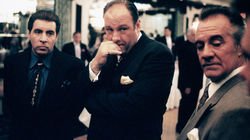
The FBI begins closing in on the DiMeo family. Tony and Carmela are angry over all the attention Italians get from the authorities, while...
Plot
The atmosphere in Essex County is thick with tension as a nasty rumor begins to circulate regarding the organization: indictments. The news has broken like wildfire, and half of New York's criminal element has already fled for Fort Lauderdale to avoid the heat. At the wedding reception for Larry Boy Barese's daughter, the conversation among the wiseguys shifts entirely from celebration to survival strategy. The central question on everyone's mind is whether Tony Soprano and his crew are going to pack up and leave town or stand their ground. The decision made by the family leadership is clear: nobody leaves. Instead, they prepare for a "housecleaning" operation, anticipating that if anyone dares show up at their doorstep wearing an FBI jacket, they will be dealt with decisively.
The mood darkens significantly when a television broadcast airs, officially naming every member of the Soprano crew as possible subjects of a grand jury investigation. There is one glaring exception to this list: Christopher Moltisanti. While his father and uncle are listed, Christopher is conspicuously absent. This omission sends him into a spiral of existential despair. He begins to question the very purpose of his existence within the family structure. If he is not significant enough to warrant a warrant or an indictment in the public eye, what value does he hold? His mental state deteriorates rapidly; he starts suffering from nightmares featuring Emil Kolar and becomes increasingly volatile.
The tension between father and son reaches a breaking point shortly after. Tony calls Christopher out for shooting a clerk at a bakery, a mistake born of impulsive rage rather than tactical necessity. Seeking an escape from his own deteriorating psyche, Christopher attempts to channel his energy into writing a screenplay. However, this creative outlet only exacerbates his instability, leading to further erratic behavior that infuriates Tony. The situation seems destined for disaster as Christopher teeters on the edge of total collapse. Just as he is about to hit rock bottom, a newspaper report names him as a "reputed gangster." This seemingly minor bureaucratic inclusion provides him with a sudden surge of validation, giving him a new lease on life and temporarily stabilizing his mood.
While Christopher navigates his internal crisis, Tony faces his own family complications. Junior drops by to visit Livia, expecting a casual chat but walking into a revelation that changes the dynamic of the entire organization forever. During their conversation, Livia casually informs Junior that Tony is seeing a psychiatrist. The weight of this confession lands heavily on Junior, who had always believed he was the most troubled member of the family. This news suggests that the patriarchal figurehead himself is seeking professional help, a notion that will ripple through every corner of the mob hierarchy.
Credits
Director: Tim Van Patten
Writer: Frank Renzulli and David Chase
Executive Producer: David Chase
Starring: James Gandolfini, Lorraine Bracco, Edie Falco, Michael Imperioli, Dominic Chianese, Jamie-Lynn Sigler, Tony Sirico, Steven Van Zandt, Robert Iler, Drea de Matteo, and Michael Papajohn.
Music
"The Legend of Tennessee Moltisanti" by David Chase (Title Theme)
"The Man Who Shot Liberty Valance" by Elmer Bernstein
"Crazy Train" by Ozzy Osbourne
"The Way We Were" by Joni Mitchell
"Theme from The Godfather" by Nino Rota
Analysis
This episode serves as a fascinating microcosm of the show's central tension between the business of crime and the pathology of the individual. The title itself, "The Legend of Tennessee Moltisanti," is deeply ironic because Christopher doesn't yet have a legend; he has a crisis. The episode brilliantly explores how Christopher measures his self-worth entirely through the lens of institutional recognition. When he isn't listed in the indictment, he feels invisible and worthless. It's a tragic flaw that defines his arc: he wants to be part of the family not just for loyalty, but for status. The moment the newspaper prints his name as a "reputed gangster," we see his psyche shift instantly from depression to manic energy. It is a dark commentary on fame and identity within the criminal underworld.
The subplot regarding Livia's revelation about Tony seeing a psychiatrist is arguably the most significant plot development of the entire series, even though it plays out almost casually here. For Junior, who has spent years being the black sheep or the victim of his father's temper, this news shatters his worldview. It forces him to confront the reality that the "don" is not invincible and that the family structure is built on a foundation of mental fragility that even the head cannot hide. This moment plants the seed for Junior's eventual redemption arc, as he begins to realize that therapy might be the only path forward.
The interaction between Tony and Christopher regarding the bakery shooting highlights the generational disconnect. Tony views the incident as a lapse in discipline and professionalism, while Christopher is spiraling into a mental health crisis that Tony struggles to understand or address directly. The episode suggests that violence is often a symptom of something deeper, a way for characters like Christopher to scream for attention when words fail them.
The soundtrack choices here are particularly potent. Using "The Man Who Shot Liberty Valance" underscores the theme of public perception versus reality; who gets shot matters more than who actually pulls the trigger in the eyes of the law. Meanwhile, "Crazy Train" plays during Christopher's breakdown, providing a jarring auditory cue to his mental state that contrasts sharply with the calm, menacing nature of the mob scenes. The juxtaposition of these songs against the backdrop of family gatherings and wedding receptions emphasizes the dissonance between the normalcy they try to maintain and the chaos happening inside their heads.
Ultimately, this episode establishes the recurring motif that in the Soprano world, nothing is as it seems. An indictment is just a list; a name in a newspaper is both a curse and a blessing; and a visit to a doctor is a scandalous revelation. The show refuses to let its characters have simple solutions, forcing them to navigate a world where every small victory is undercut by a larger psychological or structural threat.
You can stream this episode and the rest of Season 1 on where to watch.