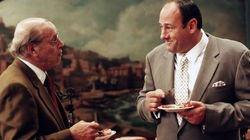
S03E03 - aired 2001-03-11

Fortunate Son

Season 3 episode guide - plot, credits, music, and analysis.

Plot

The season opener for the third year begins with a stark reminder of where the family business stands. Tony Soprano is in New Jersey, dealing with the aftermath of his trip to Italy, while Dr. Melfi deals with her own demons regarding her relationship with Gloria and the pressure from her mother. The episode quickly establishes that the Sopranos are not just surviving; they are navigating a new reality where the mob boss is no longer the untouchable kingpin he once was. The central conflict drives to Tony's office, where Paulie Walnuts delivers bad news wrapped in polite pleasantries: Livia Soprano has died. The scene is charged with immediate tension. Tony tries to maintain his cool, but the underlying fear of what this means for his mother's legacy and the family's stability is palpable. He calls Carmela, who is initially relieved but quickly realizes the gravity of the situation once she learns about Livia's final state. The episode handles the death with a cold, hard realism; there is no sentimental eulogy, just the pragmatic need to manage the estate and the funeral arrangements. Parallel to the family drama, Tony faces external threats that feel increasingly personal. The government investigation is closing in, represented by the ominous presence of the FBI agent and the subtle warnings from associates who know how slippery the waters have become. There is a distinct sense that the old days are gone, replaced by a world where even a boss has to walk carefully on thin ice. Meanwhile, the crew deals with their own issues. Christopher is struggling with his acting career, feeling the weight of living up to his father's name while trying to carve out his own identity. His relationship with Meadow is strained, and he finds himself in over his head with a producer who pushes him toward roles that might not be right for him. The episode highlights the generational divide, showing how difficult it is for Christopher to find his footing without losing himself in his father's shadow. In the hospital scene, Tony sits by Livia's bedside one last time. It is a quiet moment of confrontation where he finally speaks honestly about her role in his life and his struggles. He tells her that she has hurt him deeply, yet there is a complex mixture of love and resentment in his voice. The scene ends with a somber reflection on the cost of raising such a powerful man. The episode closes with a mix of celebration and mourning. The funeral proceedings are handled with typical mob formality, but beneath the surface, the family is fractured by grief and the looming threat of government scrutiny. Tony leaves the service, looking out at the rain-swept streets of New Jersey, contemplating the path forward for himself and his family as they face an uncertain future.

Credits

James Gandolfini (Tony Soprano), Lorraine Bracco (Dr. Jennifer Melfi), Edie Falco (Carmela Soprano), Michael Imperioli (Christopher Moltisanti), Dominic Chianese (Corrado 'Junior' Soprano), Jamie-Lynn Sigler (Meadow Soprano), Steven Van Zandt (Silvio Dante), Anthony Denara (Paulie Walnuts), Robert Iler (A.J. Soprano), Brigid Brannagh (Dr. Alex Melfi), Tony Danza (Dr. Phil LeBrun), David Proval (Leland Soprano), John Ventimiglia (Artie Bucco), Nancy Marchand (Livia Soprano - deceased), Frank Vincent (Tony Blundetto).

Music

"Fortunate Son" by Creedence Clearwater Revival "The Way It Was" by The Cars "Walk Don't Run" by The Ventures "Blue Suede Shoes" by Carl Perkins "Mack the Knife" by Bobby Darin "Ride of the Valkyries" by Richard Wagner (orchestral version)

Analysis

Fortunate Son marks a pivotal shift in the tone of the series. After the intense, chaotic energy of Season 1 and the Italian trip in Season 2, this episode grounds us back in New Jersey with a sense of impending doom that feels heavier than ever. The title itself is a clever double entendre that speaks to the show's core themes. Creedence Clearwater Revival's song is an anthem about class struggle and military recruitment, but here it serves as a grim reminder of how Tony sees himself: a man caught between worlds, constantly fighting for survival against forces larger than himself. The death of Livia Soprano is handled with a chilling efficiency that underscores the show's maturity. In earlier seasons, Livia was often played for laughs or as a source of comic tension through her phone calls to Tony. Here, she is treated with the gravity she deserves as a central figure in the family dynamic. The scene where Tony finally confronts her about her influence is a masterclass in subtext. He doesn't shout; he speaks with a quiet intensity that reveals years of suppressed pain. It is a moment of closure that feels earned and necessary, even if it leaves the audience questioning what kind of man Tony will be without her constant, albeit toxic, presence. One of the most striking aspects of this episode is how it recontextualizes the entire series. By showing the funeral and the aftermath so early in the season, the writers are telling us that the "golden age" of the Soprano family is over. The investigation is no longer a distant threat; it is an active participant in every decision Tony makes. We see Tony struggling to balance his role as a father, a husband, and a mob boss, all while trying to navigate the moral gray areas of his existence. The episode also deepens our understanding of the generational trauma within the family. Christopher's struggles with his identity and career are mirrored by Tony's own battles with guilt and responsibility. We see how the weight of the Soprano name presses down on them, forcing them to make choices that may not be for their own good but are necessary for survival. The relationship between Tony and Meadow becomes even more poignant in this context, as she begins to see the cracks in her father's armor. Ultimately, Fortunate Son is a meditation on loss and the cost of power. It forces us to confront the reality that even the most powerful people are not immune to the tragedies that shape our lives. The episode sets the stage for a season that will explore these themes with increasing depth and complexity. As we follow the Soprano family through their darkest hours, we are reminded that the road ahead is fraught with danger and uncertainty. And yet, there is a strange beauty in watching them navigate these challenges together, bound by blood and the shared history of their unique world.