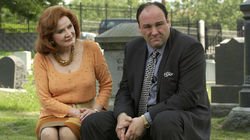
S05E07 - aired 2004-04-18

In Camelot

Season 5 episode guide - plot, credits, music, and analysis.

Plot

The narrative tension of this installment is driven by a desperate gambit from Bobby Baccalieri. Following his recent release from federal prison, Bobby has made a full recovery and returned to New York City, but he finds himself without a job or steady income. In a bid to secure a new position as an enforcer for the Morello family in Las Vegas, he sets up a meeting with Tony Soprano at the bar. The conversation takes a dark turn when Bobby attempts to discuss his past crimes, specifically the murder of a man named Koppelman, which occurred while he was incarcerated. Tony reacts with visible disgust and horror, refusing to engage with Bobby's request for a job based on that history. The dynamic is further complicated by Bobby's own internal conflict; he struggles with the guilt of his actions and the reality that his past cannot be erased simply by seeking redemption through employment. Meanwhile, Dr. Melfi continues her sessions with Tony, probing into the nuances of his father's death. She presses Tony on whether he feels any residual anger or relief regarding Junior Soprano's passing, forcing the mob boss to confront his complex emotional state. The episode also delves into the ongoing feud with the Morello family. Tony and Silvio are caught in a delicate situation where they must navigate the political landscape of Las Vegas without triggering a full-scale war that would endanger their entire operation. The stakes are high as Tony weighs the risks of engaging the Morellos against the necessity of maintaining power in his new territory. On the personal front, Carmela faces her own challenges as she grapples with her husband's emotional distance and the pressure of their marriage. Meanwhile, AJ continues to navigate the turbulent waters of adolescence, dealing with issues at school that reflect his internal struggles. The episode concludes with a scene at the bar, where the group gathers to discuss the events of the day, setting the stage for future confrontations and alliances within the Soprano family and beyond.

Credits

Written by David Chase Directed by Tim Van Patten Starring James Gandolfini as Tony Soprano, Lorraine Bracco as Dr. Jennifer Melfi, Edie Falco as Carmela Soprano, Michael Imperioli as Christopher Moltisanti, Jamie-Lynn Sigler as AJ Soprano, Dominic Chianese as Corrado Soprano Jr., Steven Van Zandt as Silvio Dante, Tony Sirico as Paulie Gualtieri, Robert Iler as Johnny "Little Johnny" Soprano, Brad Dourif as Bobby Baccalieri, and Vincent Pastore as Tommy Vintagola. Produced by Robin Veith and David Chase Executive Producers: Howard Gordon and David Chase Music by Randy Edelman Cinematography by Peter Menzies Jr. Edited by Joe Hutshing Production Designer: Janie Bryant Costume Designer: Michael O'Connor

Music

The song playing in the background during the final scene at the bar, featuring strippers dancing and a close-up of Tony smoking a cigar, is described by fans as having a nice rhythm. While the specific title remains unconfirmed in public records, it is noted for its atmospheric contribution to the episode's closing moments.

Analysis

In Camelot stands out within The Sopranos finale season not because of grand cinematic spectacle, but because of its surgical precision in dissecting the fragility of human relationships. The title itself is a stark irony; the episode offers no chivalry, no idealized kingdom, and certainly no love stories that feel pure. Instead, it presents us with a world where every interaction is filtered through layers of deception, fear, and unspoken resentment. The concept of Camelot here feels less like a fairy tale and more like a metaphor for the impossible standards we all hold ourselves to - standards that Tony Soprano constantly fails to meet, yet somehow manages to maintain his grip on power anyway. The core of this episode lies in the uncomfortable realism of Bobby Baccalieri's return. Bobby represents the most honest character in the Soprano universe precisely because he has nothing left to hide from himself anymore. He is a man who has faced death and come back, only to realize that his sins are still heavy enough to crush him if he leans on them too hard. When he seeks employment with Tony, he isn't just asking for a paycheck; he is asking for forgiveness in the only currency this world understands: loyalty and service. Tony's rejection of Bobby is not merely professional caution; it is a moral stance that defines the boundary between the mobster and the man. It forces us to ask: can redemption exist within the structure of organized crime, or is redemption something you must leave behind to survive? The dynamic between Tony and Dr. Melfi serves as the anchor for the episode's emotional weight. Her questions about his father's death are not just clinical inquiries; they are an attempt to reach the part of Tony that is still a grieving son. The fact that Tony struggles to articulate his feelings highlights the central tragedy of the show: even in therapy, where one would expect vulnerability, he remains trapped in the armor of his persona. He wants to be a father, a husband, and a leader, but the weight of those roles often prevents him from being fully present in any of them. The Morello storyline adds another layer of complexity to the narrative. The political maneuvering in Las Vegas is a masterclass in tension without explosion. David Chase understood that sometimes the most dangerous moments are the quiet ones, where two families exchange veiled threats and subtle insults. The episode builds this tension until it feels like it could snap at any moment, only to resolve it into a stalemate that leaves everyone more exhausted than before. This mirrors the real-life experience of dealing with high-stakes environments where peace is often just a temporary ceasefire. What makes this episode particularly compelling is its exploration of masculinity and vulnerability. From Bobby's shame over his past actions to Tony's struggle to connect with his family, the characters are constantly wrestling with the expectations placed upon them as men. They are expected to be tough, decisive, and unfeeling, yet they are deeply human beings who crave connection and understanding. The scene at the bar where everyone talks over each other is a perfect encapsulation of this chaos; it's a microcosm of society itself, where voices compete for attention and no one truly listens until someone finally speaks their truth. The ending of the episode, with its focus on the music and the atmosphere of the bar, serves as a reminder that life goes on even when things seem bleak. The rhythm of the song playing in the background provides