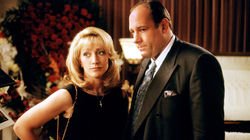
Tony's old school friend digs himself into trouble with his gambling, while Tony's family problems only continue to grow.
The Happy Wanderer (S02E06) aired February 20, 2000. Written by Frank Renzulli and directed by John Patterson, it is the sixth episode of season two and introduces one of the season's more quietly damaging subplots involving Davey Scatino.
Plot
Tony runs what he calls the Executive Game, a high-stakes poker game where he makes money not by playing but by hosting: he charges a seat fee and takes a percentage of every pot. The players are mostly civilians, white-collar men with more money than sense and a fantasy about sitting at a table with real mob figures. Frank Sinatra Jr. appears as himself, which tells you something about the game's reputation.
Davey Scatino sits down at the game. Davey (Robert Patrick) is the father of Meadow's friend Eric. He also has a gambling problem and no business being in this game. He loses badly and asks Tony for credit. Tony extends it. This is where the episode's real story begins, even if it does not seem like it yet: the season will spend several more episodes showing what it means to be in debt to Tony Soprano.
Richie Aprile wants in on the Executive Game's management, meaning he wants a cut of the profits. Tony refuses. Richie takes this badly. Their relationship has been tense since Richie came home from prison and found that Tony had reorganized things in ways that left Richie with less authority than he expected. The game becomes another pressure point.
The title character, the "happy wanderer" of the 1950s song, is what Davey Scatino used to be, what he probably still thinks he is: a guy who moves through life taking chances and landing on his feet. He will not land on his feet.
Credits
Written by Frank Renzulli, one of the core writers of the series through its early seasons. Directed by John Patterson. James Gandolfini plays Tony, David Proval plays Richie Aprile, and Robert Patrick plays Davey Scatino. Edie Falco and Jamie-Lynn Sigler appear in supporting scenes. Frank Sinatra Jr. plays himself. Sigler's Meadow and Patrick's Davey share very little screen time here, but the proximity of their family connection to what is happening at the card table is a structural choice that pays off across the rest of the season.
Music
The card game scenes use ambient diegetic sound and the background noise of the room rather than scored underscore, which puts the audience inside the executive game's atmosphere. The show's music supervision in season two drew extensively from the post-war American songbook, which fits the period associations that a game like this one carries. Licensed track availability may vary between streaming and original broadcast versions.
Analysis
The Executive Game is a good frame for how Tony actually makes money. Gambling is less romantic than the mob movies suggest: it is not about card skills, it is about the house percentage and the power to extend credit. Tony does not need to play well. He needs men who want to be near him badly enough to pay for the privilege, and men who lose badly enough to owe him.
Richie Aprile's reaction to being cut out of the game is worth watching closely. His anger is out of proportion to the dollar amount at stake. What he is really complaining about is that Tony is running things as if Richie has no standing, and Tony is, in fact, running things exactly that way. The conflict between them is not really about the game. It is about whether Tony will ever treat Richie as an equal, and the answer is no.
Davey Scatino will keep appearing this season as the debt compounds. If you are watching chronologically, pay attention to how the show handles the gap between how Tony talks about civilians and what he actually does when one of them sits across from him at a card table. The respect for civilians turns out to have conditions.
See the season two guide for how Davey Scatino's situation develops across subsequent episodes, and D-Girl for what follows here.