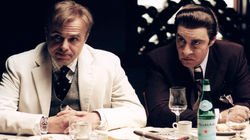
A joke sparks a series of hit contracts, while Carmela finds herself happier than perhaps she should be that Furio will be around for good.
The Weight (S04E04) aired October 6, 2002. Written by Terence Winter and directed by Jack Bender, it is the fourth episode of season four and one of the season's most politically charged installments.
Plot
The trouble starts with a joke. Ralph Cifaretto made a crack about Ginny Sack's weight, and Johnny Sack wants him dead for it. Tony is caught in the middle: Ralph is one of the best earners in the family and killing him over an insult to a man's wife is bad for business, no matter how understandable the impulse.
Johnny Sack is serious about it. He comes to Tony expecting the order to be given, and Tony has to talk him back from the edge without looking weak. The golf course scene where Tony tries to broker peace shows exactly how much of his job is managing other men's pride. Tony can't tell Johnny the hit is not going to happen; he can only buy time and hope the rage cools.
Meanwhile, Carmela learns that Furio Giunta will be staying in New Jersey permanently. Tony has arranged it. What Carmela has been trying to suppress about her feelings for Furio becomes harder to ignore when the arrangement is no longer temporary. The subplot runs quietly through the episode but carries real weight by the time it pays off later in the season.
Credits
Written by Terence Winter, who wrote several of season four's strongest episodes and would go on to create Boardwalk Empire after The Sopranos ended. Directed by Jack Bender, who directed across multiple seasons of the show. The cast includes James Gandolfini as Tony, Lorraine Bracco as Dr. Melfi, Edie Falco as Carmela, Joe Pantoliano as Ralph Cifaretto, and Vincent Curatola as Johnny Sack. Frederic Forrest plays Ginny Sack's husband only in the sense that we see Johnny's obsession with her dignity; Ginny herself (Denise Borino-Quinn) barely appears but drives the entire A-plot.
Music
The music supervision on this episode follows the show's established pattern of licensed tracks that comment on the action from a slight distance. Season four leans on period-specific songs that ground the domestic scenes in a particular New Jersey emotional register. Streaming releases may differ from the original HBO broadcast in specific track placement due to licensing renegotiations over the years.
Analysis
What makes this episode work is how clearly it shows the gap between mob mythology and mob reality. In the mythology, insults to a man's wife get answered immediately. In reality, Tony cannot afford to honor that code because Ralph is making too much money. Johnny Sack's rage is legitimate on the terms of the world they all agreed to live in, and Tony's refusal is a practical compromise that Johnny takes as a betrayal.
The episode also establishes something important about the limits of Tony's authority. He is not a king. He manages competing interests and tries to keep the peace, and sometimes keeping the peace means letting something that should be punished go unpunished. Ralph walks away from this situation, for a while, because the books matter more than honor. That will cost Tony later.
Carmela's arc this season is careful in how it develops. She does not act on her feelings, but the show lets the audience watch her become aware of them. The permanent nature of Furio's arrangement shifts something. It is one thing to manage feelings about someone who will eventually leave. It is another when they are staying.
Pair this episode with Pie-O-My to follow Ralph's trajectory, and with the season four guide for the full arc of the New York-New Jersey tensions that define this run. For an overview of filming locations recognizable in scenes like this, see the locations guide.